Rural Law Enforcement Grant Program Statewide Overview 2025
Introduction
In 2023, the Texas Legislature established the Rural Law Enforcement Grant Program to provide supplemental salary assistance to sheriff’s departments, constable’s offices, and district and county attorney’s offices in rural areas of the state. The Texas Comptroller’s office was required to adopt the necessary rules to administer the grant program, including a standardized application process and forms, the manner of submitting the form, deadlines to apply, grant disbursement, spending of grant money, monitoring procedures, and the return of grant money that was not used for a permissible purpose.
Grant Eligibility
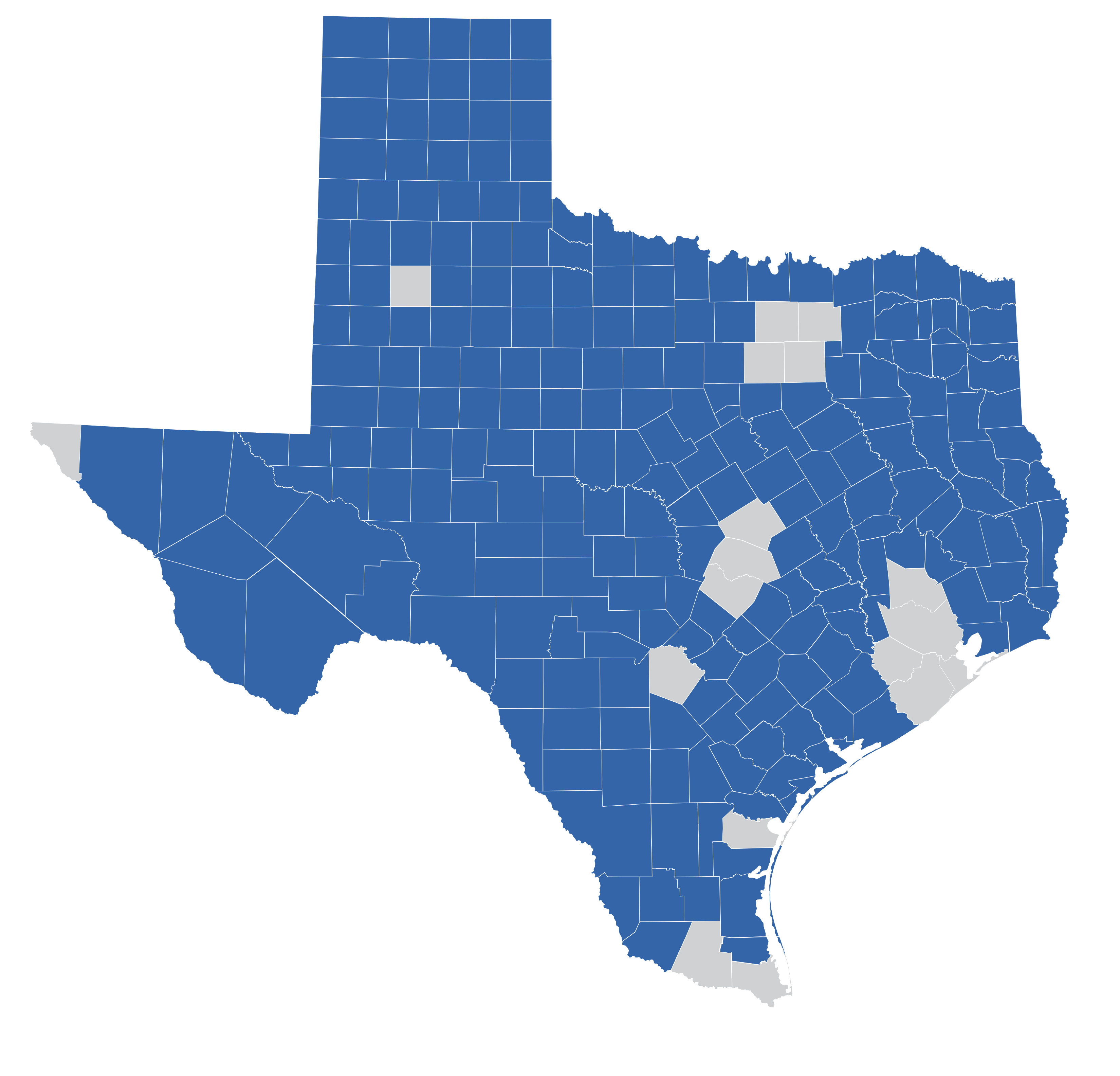
Sheriff’s offices and constable’s offices in counties with a population of 300,000 or less, as well as prosecutor’s offices in jurisdictions with populations of 300,000 or less are eligible for the grant program. Of Texas’ 254 counties, 236 counties meet this criteria (Exhibit 1).
Exhibit 1 Texas Counties with Populations of 300,000 or Less
Note: Grant eligibility is based on population from 2020 Census data.
Source: Texas Demographic Center
Funding amounts vary among the eligible law enforcement entities and are dependent on the size of the county or jurisdiction (Exhibit 2).
Exhibit 2
Rural Law Enforcement Offices’ Grant Amounts and Population Requirements
Law Enforcement Offices
Grant Amount
Population Requirement
Sheriff’s Offices
$250,000*
Less than 10,000
$350,000
10,000 or more but less than 50,000
$500,000
50,000 or more but less than 300,000
Prosecutor's Offices
$100,000
Less than 10,000
$175,000
10,000 or more but less than 50,000
$275,000
50,000 or more but less than 300,000
Constable's Offices
Varies
Less than 300,000
*The General Appropriations Bill (Senate Bill 1 – 89th Legislature, Regular Session) allocated an additional $100,000 to counties awarded the sheriff’s office grant with populations between 7,500 and 10,000.
Source: Texas Comptroller of Public Accounts
Permissible Grant Expenditures
Permissible expenditures of the grant funds must follow strict criteria. These guidelines differ among the law enforcement entities. Importantly, a county may not reduce the amount of funds provided to the law enforcement entities because of grant funds.
Sheriff’s offices
A sheriff’s office can use grant funds for supplemental salary assistance and for the purchase of safety equipment, vehicles and firearms. Before purchasing such equipment, however, the office must provide a minimum salary of at least:
$75,000 for the county sheriff;
$45,000 for each deputy who makes motor vehicle stops in the routine performance of their duties; and
$40,000 for each jailer whose duties include the safekeeping of prisoners and the security of a jail operated by the county.
Sheriff’s offices must spend the money to fully fund the required salary increases (sheriff, deputies and jailers) before they can spend the money on additional expenditures. Once they’ve met that requirement, they can hire additional deputies or staff for the office and purchase safety equipment, firearms and vehicles. However, they cannot give raises using grant funds to anyone that currently works in the office outside of sheriff, deputies and jailers.
Constable’s offices
Grant money for constable’s offices must be used to provide a minimum salary of $45,000 to a qualified constable. To receive funding, the county must contribute at least 75 percent of the money required to meet the minimum annual salary, and the other 25 percent will come from the grant funds. If the constable is already making above the minimum salary, then the county is not eligible for the grant.
A qualified constable is defined by the following standards:
is elected to, and currently holds, an office created before Jan. 1, 2023;
primarily (more than 50 percent of the time) makes motor vehicle stops in the routine performance of their duties; and
Permissible expenditures for a qualified prosecutor’s office include increases in salary of an assistant attorney, investigator or victim assistance coordinator. The funds can also be used to hire additional staff for the office.
However, they cannot give raises with grant funds to anyone that currently works in the office outside of assistant attorney, investigator, and victim assistance coordinator.
Of note, some district attorney districts cover more than one county. In those cases, the Comptroller’s office totals the populations of all counties to make the determination of the grant amount.
Application Process
The list of application requirements state that a county judge must apply for the grants on behalf of sheriff’s offices and constable’s offices. For county attorney’s, the county judge or county attorney must apply on behalf of the office. For district attorney, criminal district attorney or county and district attorney’s office — the prosecutor must apply for the grant for its own respective office.
The first grant application cycle took place Jan. 1-31, 2024. All qualified counties and prosecutor’s offices could apply for the grant funding during this period, despite their fiscal year start date. For the current grant applications, a county or prosecutor’s office must apply for grants within 60 days prior to each office’s fiscal year start date, extending to no later than 30 days after that date (Exhibit 3). By law, failure to meet the deadline means that office will have to wait until the next fiscal year to apply.
Exhibit 3
Filing Period for Current Grant Applications
Fiscal Year Start
Open date
Close date
Oct. 1
Aug. 2
Oct. 31
Jan. 1
Nov. 2
Jan. 31
Source: Texas Comptroller of Public Accounts
Compliance Report
No later than two months following the law enforcement entity’s fiscal year start, the grantee is required to submit an electronic compliance report with the Comptroller’s office (Exhibit 4). This report provides documents — such as invoices, purchase orders and payroll — to ensure compliance with grant allowances in the law. If the county or office has leftover or misspent funds, it must return the money to the Comptroller’s office following the review.
Exhibit 4
Compliance Report Periods for Grant Recipients
Fiscal Year Start
Open date
Close date
Oct. 1
Oct. 1
Dec. 1
Jan. 1
Jan. 1
March 1
Source: Texas Comptroller of Public Accounts
Grant Data
The 88th Legislature allocated $330 million to the Rural Law Enforcement Grant Program for the 2024-25 biennium budget, and the 89th Legislature allocated another $330 million. At the close of the state’s fiscal year, the Comptroller’s office published final grant distribution amounts for the first and second rounds of applications and which counties received grants. In total, more than $254.4 million was awarded to 1,020 grant recipients (Exhibit 5).
Exhibit 5
Rural Law Enforcement Grants Awarded and Amount Totals by Fiscal Year